Green flags in texting: what healthy patterns look like
Search for green flags and most tools will happily hand you a checklist and a score — as if a healthy connection were a box to tick. It is not. A green flag is not a single sweet text; it is a pattern you can only see across time — reciprocity, repair, and attentiveness that keep showing up. Here is what those patterns actually look like in a thread, and why the honest version of this always waits for the pattern instead of celebrating one good message.
ReadBeneath editorialUpdated July 15, 2026
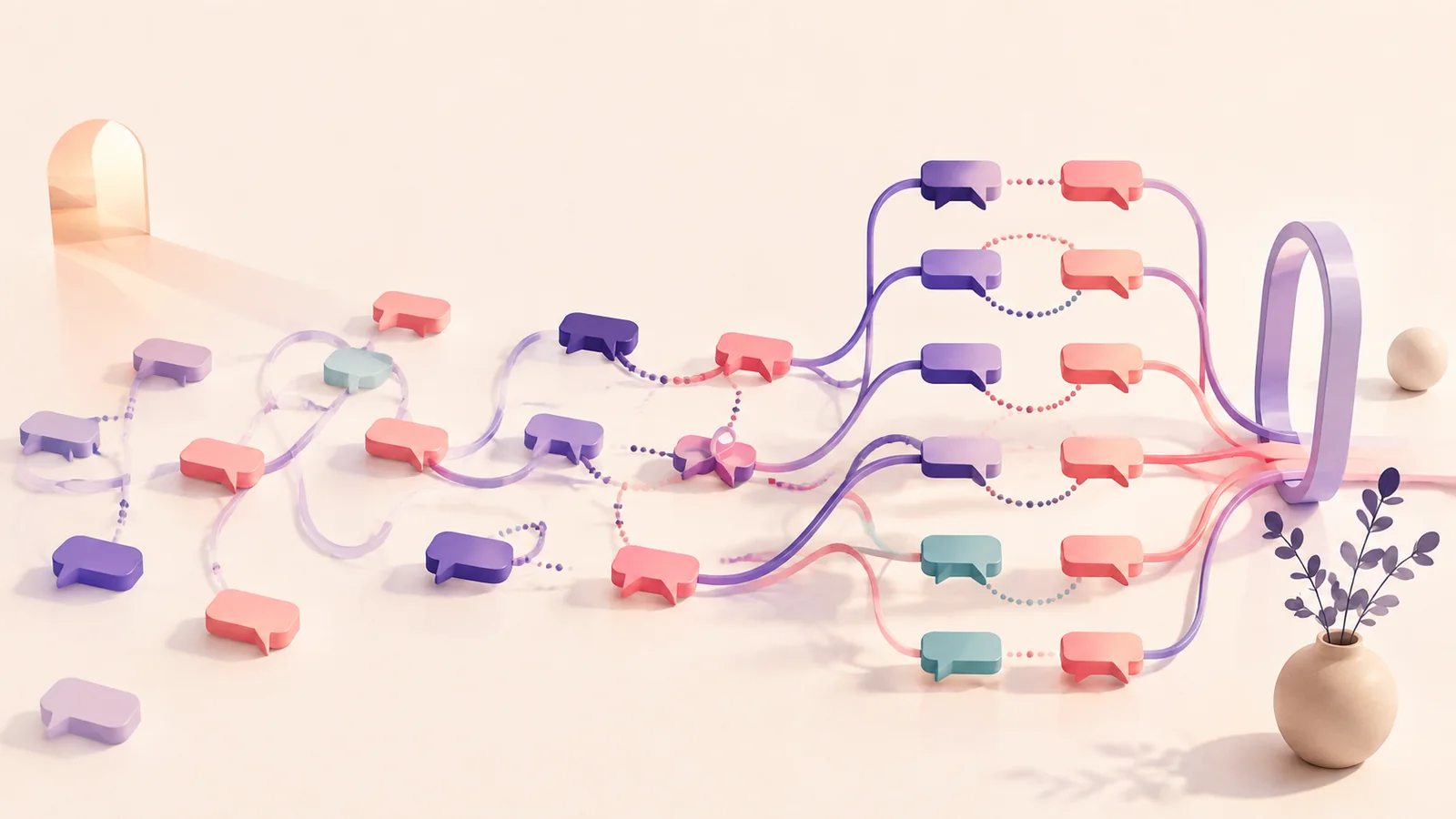
What actually counts as a green flag over text?
The useful definition is narrow: a green flag is a repeated pattern of healthy communication, not a highlight reel of the nicest things someone has ever typed. That distinction is the whole game. Any person can produce a warm message on a good day. The signal worth trusting is the one that survives ordinary Tuesdays — the small, unglamorous exchanges where nobody is performing.
Three patterns come up again and again in relationship research and are visible in a chat thread: reciprocity (effort flows both ways), repair (friction gets tended to, not buried), and attentiveness(each person tracks the other’s inner world). None of them proves anything in a single instance. All of them become meaningful when they recur.
Green flag 1: reciprocity you can actually feel
Reciprocity is balance in the give-and-take — questions answered with questions, plans met with plans, vulnerability met with warmth rather than deflection. Relationship scientists studying perceived partner responsiveness (the sense that someone understands, values, and supports you) find it to be one of the steadiest ingredients of closeness. Over text, responsiveness looks like a reply that engages with what you actually said.
One reading: B engages with the specific thing A said, asks a practical question and a caring one, and leaves room for A to answer either — responsiveness rather than a reflexive 'that sucks'.
A fair alternative: This is a warm exchange, but it is one exchange. Read generously in both directions: a single responsive reply does not certify B as endlessly attentive, and a distracted one-word reply on another day would not undo it. The pattern is what counts.
The tell is not that B was nice once. It is that, read across dozens of exchanges, the effort keeps landing roughly evenly — neither person is always the one reaching, always the one carrying the thread.
Green flag 2: repair after friction
Every relationship generates friction. What separates sturdy ones, in the Gottman Institute’s research, is not the absence of conflict but the presence of repair attempts — the small bids to de-escalate and reconnect after a rough moment. Over text, repair is easy to spot once you know its shape: someone circles back, takes a slice of ownership, and reaches for the other person rather than for the last word.
One reading: B owns a specific behavior ('took it out on you'), names it as unfair, apologizes, and proposes a concrete way back in — a textbook repair attempt rather than a defense.
A fair alternative: One clean repair does not mean B always repairs, and a clumsier apology from someone else would not mean they never do. Repair is a green flag as a habit — look for whether reaching back is the norm after friction, not whether one apology was perfectly worded.
The opposite of repair is not conflict — it is friction that never gets tended to, the argument that simply goes quiet and leaves residue. A partner who reliably finds their way back after a hard exchange is showing you something durable.
Green flag 3: attentiveness — the small stuff lands
Attentiveness is the quiet evidence that someone is tracking your inner world across time: they remember the interview you were nervous about, they follow up on the thing you mentioned once, they notice a shift in your tone before you name it. Gottman’s work calls the everyday version of this turning toward bids — responding to the small invitations for attention rather than turning away from them.
One reading: B remembered a small, easily-forgotten worry and followed up unprompted — attentiveness to A's inner world rather than to the logistics of the day.
A fair alternative: Memory is uneven for everyone. B forgetting a detail another week would not mean they stopped caring — some people hold dates, others hold feelings. Attentiveness is a green flag as a running tendency, not a memory test with a passing grade.
Notice how modest the raw material is: a follow-up question about a dentist appointment. Green flags rarely look dramatic in isolation. Their weight comes entirely from repetition — the hundredth small follow-up is what tells you who someone is.
Why one sweet text is not a green flag
This is where most “green flags” content quietly goes wrong. A screenshot of one perfect paragraph proves that a person is capable of a perfect paragraph. It says nothing about whether they are reciprocal, whether they repair, whether they stay attentive when the novelty fades. Single messages are the least reliable evidence there is — tone is easy to misread over text, and everyone has good and bad days at the keyboard.
The honest version of reading green flags refuses to be impressed by a moment. It asks: does this keep happening? Across weeks? Symmetrically? That is a question about density, not about any one exchange — and it is the same discipline that keeps an analysis from overreaching.
Can a tool point these patterns out honestly?
Partly, and only within honest limits. ReadBeneath looks for patterns like reciprocity and repair in a conversation you upload, per speaker, and every observation must cite the specific messages behind it. Just as important is what it refuses to do: it never issues a compatibility percentage or a verdict, it caps its own confidence rather than claiming certainty, and it pairs each observation with a fair alternative reading — the same posture the examples above model. When a thread is too thin to support a pattern, it tells you that plainly.
That is the difference from the tools that will sell you more certainty than any chat log can honestly provide. The point is not to hand you a greener-than-thou rating. It is to show you a pattern, show you the messages under it, and leave the meaning to you.
Common questions
What is a green flag in texting?
A green flag is a healthy communication pattern that repeats over time — consistent reciprocity, a genuine attempt to repair after friction, or small signs of attentiveness like remembering what you mentioned last week. It is a pattern, not a single warm message. One thoughtful text is nice; the same care showing up again and again is the actual signal.
Are green flags more reliable than warning signs?
They are read the same way: as patterns across many messages, never as one moment. A single kind text no more proves someone is a safe partner than a single curt reply proves the opposite. What makes any signal trustworthy is repetition, and the honest floor for calling something a pattern is a lot more history than most people assume.
Can green flags be faked early on?
Consistency is the hard thing to fake. Anyone can send an attentive message on a good day; very few people can sustain reciprocity and repair across weeks of ordinary, unglamorous exchanges. That is exactly why density over time matters more than any single impressive text — and why an honest read waits for enough of it.
Does ReadBeneath rate how green a relationship is?
No. There is no greenness number, no compatibility percentage, and no verdict. ReadBeneath surfaces specific patterns, cites the messages behind each one, and pairs every observation with a fair alternative reading. If the history is too thin to support a pattern, it says so instead of inventing a rating.
Keep reading
- Analyze a WhatsApp conversationUpload a .txt export and get per-speaker patterns, each tied to cited messages, with a fair alternative on every finding.
- Signs someone likes you over textThe early-days version of the same idea — read initiation and responsiveness as a pattern, not one flirty message.
- How many messages reveal a real pattern?The honesty anchor: the exact sample-size floors an analysis waits for before naming anything.
- How ReadBeneath worksThe frameworks behind the reads, the rules it enforces, and what it will not do.
More on the patterns worth naming lives in the Learn hub.
Curious what your own threads keep doing?
Upload a conversation and get a free read: per-speaker patterns with the messages that support them, a fair alternative for every observation, and a straight answer when the sample is too thin to say.