Who Texts More? What Your Chat Statistics Really Show
Every December, group chats fill with screenshots: who sent the most messages, who double-texts, who takes six hours to reply. The 'WhatsApp Wrapped' genre is Spotify Wrapped for your relationships, and it is genuinely fun. This is a straight guide to the stats you can actually pull from a chat — and an honest read of what each number does and does not mean, so you can enjoy the scoreboard without starting a fight over it.
ReadBeneath editorialUpdated 2026-07-19
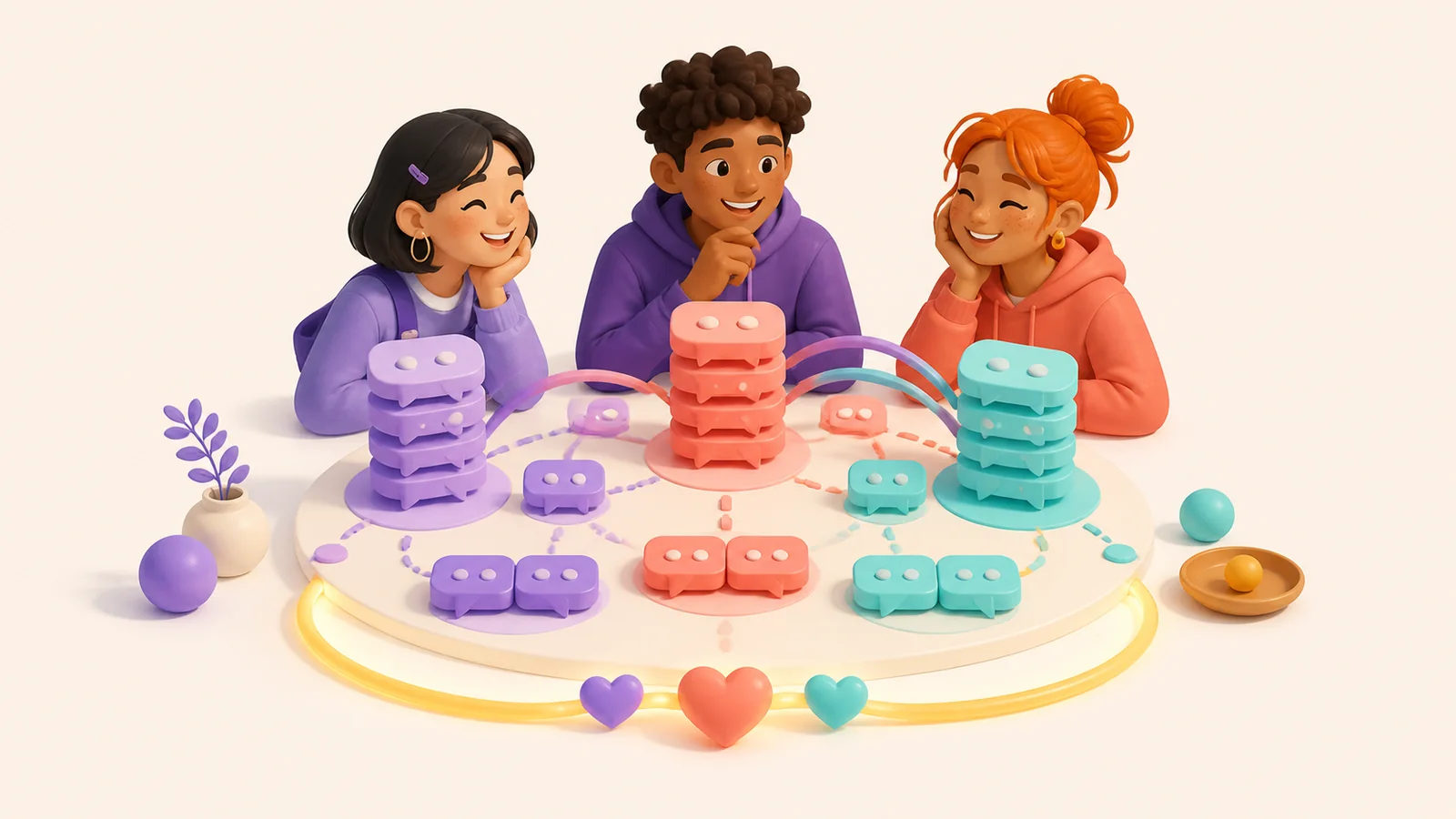
What statistics can you pull from a chat export?
A plain text export of a conversation is a surprisingly rich little dataset. Once a tool has it, the fun stuff is mostly counting: totals, ratios, timing, and the small linguistic fingerprints you leave without noticing. Here is the full inventory of what a wrapped-style read can surface — alongside the honest column that most tools skip, which is what each number does not prove.
| The stat | What it counts | What it doesn't mean |
|---|---|---|
| Message count | Total messages each person sent. | That the bigger number cares more — talkers simply talk more. |
| Who texts first (initiation ratio) | How often each person opens a new conversation. | That the initiator is more invested; some people just start faster. |
| Reply time | How long, on average, each of you takes to reply. | That a slow replier is cold — plenty of people batch their phone time. |
| Emoji & word signature | Your most-used emoji, average message length, favourite phrases. | Anything serious at all — this is pure personality trivia, and it's great. |
| Most-active hours | The times of day you two reliably light up. | More than a shared rhythm; a fun overlap, not a report card. |
| Longest conversation streak | The longest run of back-and-forth days without a gap. | That a quiet stretch meant something was wrong. Life gets busy. |
None of these require reading anyone’s mind. They are arithmetic on a chat log, which is exactly why they are safe to enjoy — and exactly why they stop short of the questions people are really asking when they screenshot the results.
Who texts more — and does it actually matter?
Whoever sends more messages usually just enjoys texting more. Volume is a style, not a devotion meter. One person narrates their whole commute; the other saves it all for a call that night. Two very different numbers, two people equally into each other. Reading a lopsided message count as a lopsided relationship is the single most common mistake the wrapped-style stats invite — and it is worth resisting on purpose.
There is a genuinely thoughtful version of this question, though, and it is not about volume at all. What decades of relationship research point to is responsiveness — whether you turn toward the small moments someone offers — not raw output.
What predicts a lasting couple isn't who texts more — it's responsiveness: in Gottman's Love Lab, the pairs who stayed together turned toward each other's small bids roughly 86% of the time, versus about a third for those who later split.
That is the number to keep in mind while you laugh at the counts. The scoreboard measures quantity; connection is mostly about quality of response. A person who texts half as much but answers your good news with real warmth is doing the thing that actually matters — and no tally will ever show it in the leaderboard.
Who texts first? The initiation scoreboard
“Who texts first the most” is the marquee stat of every wrapped-style tool, and the one most likely to sting. An 80/20 initiation split looks damning on a card: you started four out of every five conversations this year. But initiation and warmth are two different measurements, and the fun stat only captures the first one.
One reading: Tally it up and you sent the first text eight times out of ten this month — easy to read as you carrying the whole thing while they coast.
A fair alternative: But look at the reply: same energy, an actual plan, an exclamation to match yours. Some people almost never send the opening text and light up completely the second you do. The initiation count and the response warmth tell different stories, and the scoreboard only shows one of them.
So read an initiation gap as information, not a sentence. If your side of it has started to feel like effort rather than fun, that is worth paying attention to — but the tell is what happens after you reach out, not the raw ratio. We go deep on exactly that in what it means to always be the one texting first, which is where the scoreboard stops being funny and becomes a real question worth asking.
What does an actual Group Chat analysis show?
Our Group Chat sample follows fictional friends through a real-shaped chat. What is striking about the report is what it refuses to do. It reads their shared energy without ranking the people in it, characterises their humour style, and maps their banter rhythm — the fast volley, the in-jokes, the running bits — and then it stops. There is no score, no ranking of who likes whom more, no tidy conclusion about the state of the friendship.
ReadBeneath's Group Chat mode is deliberately conclusion-free — no scores, no rankings of affection, and a fair alternative attached to anything it does observe.
That restraint is the whole design, not a limitation. A fun read is allowed to be delightful without pretending to be an oracle, and pinning a final-word label on a friendship from its group-chat energy would be exactly the overreach the rest of the product exists to avoid. So the Sam, Alex & Jordan report gives you the shareable, grin-worthy observations and leaves the meaning where it belongs — with the people in the chat. If a stat ever nudges toward something heavier, the same fair-alternative posture from the healthy-pattern side of things applies: an observation, never an accusation.
How do you get your own numbers?
The practical part is easy, and it starts with an export rather than a screenshot — screenshots lose the timestamps that make reply-time and most-active-hours stats possible. On WhatsApp, open the chat, tap the name at the top, and choose Export Chat (text-only keeps the file small). Our step-by-step for how to export a full WhatsApp chat walks through it, and iMessage, Telegram, and Instagram exports work much the same way.
From there, drop the file into a tool that will count it. The WhatsApp chat analyzer and the Telegram chat analyzer both produce the stat rundown, then layer honest meaning on top instead of leaving you with bare counts to over-read.
Which stats make the best screenshots?
Part of the joy is sending the result to the person you analysed, so it helps to know which findings actually travel. The ones people screenshot most are the affectionate-embarrassing kind: your single most-used emoji, the hour you two reliably start texting, the longest streak of days you never went quiet, or a “wrapped for couples” card that names your combined energy in a phrase. They land because they are specific and warm — a tiny, true detail about the two of you.
The stats that make lousy screenshots are the ones dressed up as judgments: a raw who-cares-more ranking, a lopsided initiation count with no context, anything that reads as a scoreboard of affection. Those do not spark joy; they spark a slightly defensive text back. The shareable version keeps it light and lets the fun detail be the whole point.
What if a number actually stings?
Sometimes a stat lands wrong. You see that you send 70% of the messages, or that their reply time doubled this year, and the fun drains out of it. That reaction is worth taking seriously — not because the number proved anything, but because it named something you were already feeling. A chart cannot tell you what a gap means. Only the person on the other end of it can.
So the honest move, if a number genuinely bothers you, is not to run the analysis again hoping for a kinder result. It is to treat the stat as a conversation starter, not a piece of evidence: “I noticed we text way less than we used to — are we good, or is life just busy right now?” gets you an actual answer. The scoreboard was never going to.
Common questions
How do I see my WhatsApp chat statistics?
WhatsApp does not show per-person stats in the app, so you export the chat first: open the conversation, tap the contact or group name, scroll to Export Chat, and choose the text-only option. That file is what any analyzer or wrapped-style tool reads to count messages, initiations, and reply times for each person.
Is there a WhatsApp Wrapped like Spotify Wrapped?
WhatsApp does not make an official one, but plenty of third-party tools produce a year-in-review from your exported chat — message counts, who texts first, busiest hours, top emoji. They vary a lot in how they handle privacy, so it is worth checking whether a tool processes your file locally or uploads it, and whether it deletes it after.
What does it mean if I text more than my partner?
On its own, usually just that you are the chattier texter of the two. Message volume tracks communication style far more reliably than it tracks feeling. It only becomes worth a gentle conversation if the gap is new, one-sided in effort as well as count, or genuinely bothering you — the number is a prompt, never proof.
Can I analyze a group chat?
Yes. A group export shows the same stats across everyone: who posts most, who starts threads, who lurks and who carries the banter. It is often the most purely fun version, since group dynamics rarely carry the same emotional weight as a one-to-one thread. Just remember everyone in it contributed without opting into being analyzed.
Are chat analyzer apps safe for private conversations?
It depends entirely on the tool. The questions that matter are whether it masks personal details, whether your file is deleted after processing, and whether the other person knew. We cover this in detail in our piece on pasting chats into general chatbots — the same caution applies to any wrapped-style tool.
Keep reading
- Always the one texting first?When the initiation scoreboard stops being funny — what an effort imbalance does and doesn't say, measured rather than guessed.
- Should you paste your texts into ChatGPT?The privacy question worth asking before you upload any private chat to any tool — including the wrapped-style ones.
- Analyze a WhatsApp chatGet the stat rundown from your own export, with honest meaning layered on top instead of bare counts.
- Green flags in textingThe warm patterns worth noticing — the responsiveness a message count never captures.
Sources
- Gottman, J. M. (2001). The Relationship Cure. Crown — couples who stayed together turned toward each other's bids about 86% of the time, versus about 33% for those who later separated.
- Pew Research Center. Mobile Fact Sheet and texting research — data on how central everyday messaging has become to how people stay in touch.
- Vanderbilt, R. R., Brinberg, M., & Lu, Y. (2025). The Impact of Attachment Style on Communication Frequency and Language Use in Romantic Partners' Text Messages. Journal of Language and Social Psychology.
- ReadBeneath. How ReadBeneath works — the Group Chat mode is deliberately conclusion-free, confidence is capped at 95%, and every finding ships with a fair alternative.
See your chat's real stats — and what they actually mean
Upload a conversation and get a free read that counts who texts more, who starts, and when you talk most — then layers honest, fair meaning on top, with Group Chat kept deliberately playful and score-free.